
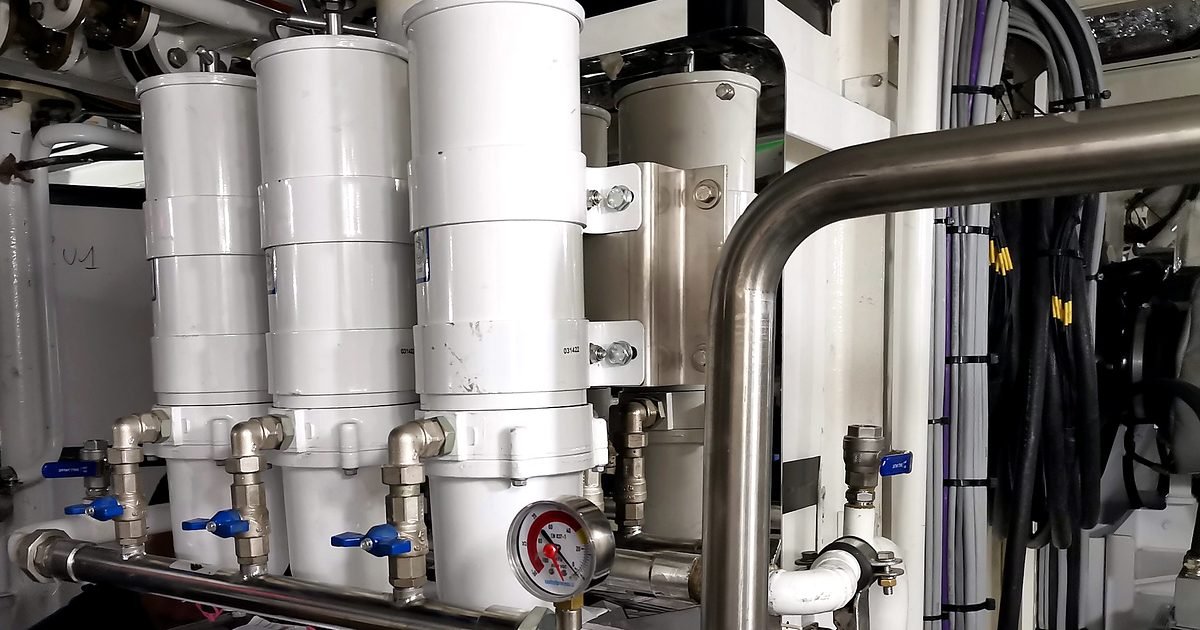
The yacht is hauled out on schedule. The new chiller is still at the factory.
The OEM service engineers are busy on other yard projects, and the fitting contractor booked to start tomorrow has to be postponed and rescheduled.
It’s a simple example of what happens on many yard periods where machinery, tanks and marine systems are in the scope of work.
At Flowazur Consulting, we work on superyacht refit planning for machinery and marine systems alongside yacht management companies and chief engineers: from the first onboard survey to sea trials, including the most challenging retrofit projects
Why Refit Planning Starts in the Engine Room
We know the superyacht industry well. We work on new builds and refits, so we know how much yacht design and interiors matter.
But every technical department and engineer officer knows what happens when maintenance and refit works aren’t done properly. The consequences for a superyacht can be severe:
A diesel generator out of service.
A sewage treatment unit not working.
These scenarios are extremely uncomfortable for every crew member, from the deckhand to the captain. They can ruin charters and the owner’s holidays.
The Shipard Season Is Short and Busy
The refit season traditionally runs from October to May (Hill Robinson), and in Palma captains now book berths and haul-out dates much further in advance (SuperyachtNews). So the scope of work starts well before the yacht enters the shipyard.
It starts with an onboard survey, where piping systems, tanks, instrumentation and machinery are assessed with the yacht manager and the chief engineer to define the items to be refitted. We covered the survey in our guide to superyacht refit engineering.
Once all the items are listed, setting priorities is fundamental, because many refit timelines are short. The technical team onboard must clearly mark every item:
Works that must be completed in this yard period.
Works that can move if time or budget runs short.
Building the Scope from the Machinery
Running Hours and OEM Overhaul Intervals
The chief engineer must establish which machinery needs OEM maintenance because its running hours have reached the maintenance schedule: main engines, generators, gearboxes, stabilisers, thrusters.
These items are sensitive, because many OEMs have limited service engineer availability. The work must be scheduled early, to be sure it’s completed within the yard window.
Jobs That Only Happen Out of the Water
Once all the items are listed, the next step is to split the works that need the yacht out of the water from those that can be done afloat.
Work on sea chests and crossovers needs high priority, especially when a problem hasn’t been fully defined because it couldn’t be inspected beforehand.
Bow thrusters and shaft seals are typical items on many refit work lists, and most of the time they need an OEM service engineer. So they must be scheduled well in advance, to secure the engineer’s attendance during the fixed yard period.
Long-Lead Equipment and Spares
Another key factor when organising the refit scope is the availability of materials and parts.
A simple example are pipes vs machinery parts.
Lorem ipsum dolor sit amet, consectetur adipiscing elit. Ut elit tellus, luctus nec ullamcorper mattis, pulvinar dapibus leo.
Press-fit and CuNi press pipes, available in many countries.
The compressor of a chiller unit.
Assessing the parts to be refitted and their lead times is mandatory, to avoid bad surprises during the yard window. For piping, see our article on superyacht piping refit.
The typical case: a component or machine whose lead time is longer than the yard window, ordered late. The result is a refit operation that has to be postponed. |
Feasibility Before Ordering
When the scope goes beyond repairing pipes, instruments or machinery, and new machinery or systems have to be installed, the project is no longer just a refit. It’s also a retrofit. This kind of project needs careful analysis in advance:
- Does the new machinery have the same dimensions as the old one?
- Does it bring new systems with it?
- What power does it require?
- How does it integrate with the automation and the other systems onboard?
These are only some of the questions the technical department must answer when new machinery or systems come onboard during a refit. In these cases, we strongly recommend a feasibility study to avoid high-risk scenarios during the yard period.
Getting Machinery In and Out: Removal Routes
When large machinery or components have to be replaced or overhauled ashore, the removal route must be assessed too. Many shipyards have cranes for heavy components, but the lift itself must be planned to reduce the risk of clashes and keep the operation safe.
Typical items are pistons, generator parts, chiller units and ballast water treatment system (BWTS) skids. Whenever one of these is on the work list, the whole operation needs a detailed study, from transport to the berth to positioning the machinery on its foundation.
This must be planned well before the superyacht arrives at the shipyard.
Keeping the Yacht Alive on the Hard
The chief engineer and second engineer also need to consider whether the crew stays onboard during the refit. Very often it does, which means arranging the piping systems with temporary external hoses and portable tanks positioned in the yard. Typical temporary arrangements are seawater cooling for the chillers and diesel generators, a shore power connection and a grey water discharge tank.
This must be prepared in advance too:
- which lines will be routed to temporary yard tanks
- which onboard tanks can still be used, because they’re not part of the refit
- which overboard discharge valves must be closed
- where the external flexible hoses will connect: flanges or camlock fittings
Planning these piping arrangements in advance gives the shipyard clear instructions, so it can set up all the temporary systems with its own team. Without a plan, flexible hoses end up in areas where work is scheduled, and they have to be reconnected a few days later. Double job.
Recommissioning and Sea Trials
To complete the refit scope, the technical items that need commissioning and sea trials must be scheduled properly.
In a major refit where new machinery is installed, commissioning is mandatory. Sea trials are often required when several items and modifications have been carried out.
1 week | minimum contingency to plan for the items that need commissioning. |
How Flowazur Supports Superyacht Refit Planning
Flowazur supports standard refit projects involving piping and machinery works, and highly complex retrofit projects where our supervision service is combined with our engineering. Our typical workflow:
Marine Systems Engineers on Site in Barcelona, Palma, Valencia, the French Riviera, Italy and Malta
We’re an engineering and consulting firm based in Barcelona, supporting new build, refit and retrofit projects that involve piping and machinery modifications.
Planning a refit in these areas? You’ll find in us a dual expertise, onboard and ashore engineering, able to guide you through even the most challenging projects.
FAQ
How far ahead should we plan a superyacht refit?
Start with the onboard survey well before haul-out: early enough to book OEM service engineers and to order any component whose lead time is longer than the yard window. As a reference, a captain interviewed by Dockwalk starts planning six months ahead.
Which works can only be done with the yacht out of the water?
Typically sea chests and crossovers, bow thrusters, propellers and shaft seals. Most of them need an OEM service engineer, so book the attendance well before the yard period.
Which parts should be ordered before the yacht arrives at the shipyard?
Any component or machine whose lead time is longer than the yard window. Press-fit pipes are usually easy to source; the compressor of a chiller unit can be much harder.
Can the crew stay onboard during the refit?
Very often, yes. It means temporary arrangements in the yard: seawater cooling for chillers and diesel generators, shore power and a grey water discharge tank. Plan the lines, tanks, valves and hose connections before the yacht arrives.
How much contingency should we plan for commissioning?
At least one week for the items that need commissioning, especially in a major refit where new machinery is installed.
Planning a Drydock? Book a Pre-Refit Machinery Survey
Send us the yacht’s details, the machinery and systems involved and the yard window. We’ll confirm the scope, timing and survey team. Book an Onboard Survey