
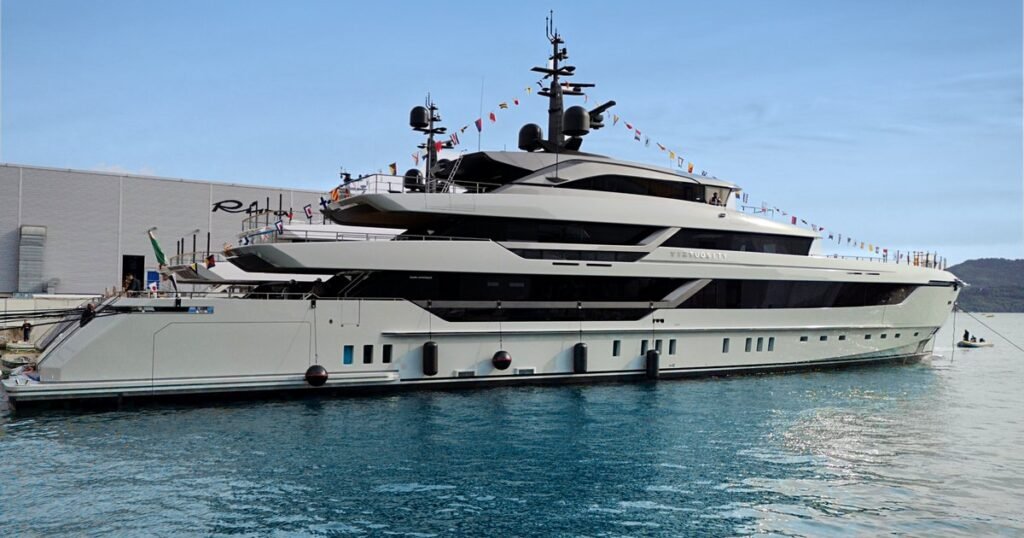
Day 3 of the yard period. The chief engineer removes a deckhead panel and finds a corroded black water line.
Day 4. While a bulkhead panel is being renewed, the crew finds a significant amount of moisture next to a fan coil unit.
These are just two days in a typical superyacht refit.
At Flowazur Consulting we provide superyacht refit engineering for piping and onboard systems:
- Onboard survey
- Engineering work list
- Shipyard support, from installation to commissioning
Captains, owner’s representatives and chief engineers know very well how challenging a refit or retrofit project can be. Especially when numerous marine systems have to be refitted or installed.
Why Engineering Decides the Outcome of a Superyacht Refit
In the superyacht industry we know how important the interior is, and how much care it needs. But frankly, the interior can’t ruin a charter season or an owner’s holiday. A badly managed engineering refit can, if major works in the engine room and on the hotel systems aren’t properly planned.
In an August 2026 article on SuperyachtNews, Andrew Roch describes a yacht booked for a light refit: €250,000, eight weeks, nothing structural. With 15 to 30 contractors to coordinate and heads of department rotating halfway through, settled decisions get reopened, and the €250,000 refit becomes €500,000.
Roch blames coordination, and he’s right. But many of the decisions that get reopened are technical: a valve position, a pipe route, a material. He even describes a subcontractor fitting a valve where nobody can reach it. Put these decisions in an engineering work list before haul-out, and they stop being opinions.
Who Does What in a Superyacht Refit
A superyacht refit is a unique and demanding environment. Several parties and authorities are involved, and each one must work with the others to reach the same goal.
Captain and chief officer
What they doTogether with the owner’s representative, they manage the contractors’ work, timesheets and works schedule for structure, superstructure, accommodation and interior. Plus, together with the chief engineer, they oversee all safety-related works, such as the refit (or retrofit) of the sprinkler system.
Where engineering helpsA work list where safety-critical systems (sprinkler, fire-fighting, bilge) are clearly prioritised.
Chief engineer and second engineer
What they doThey are the technical authority onboard, responsible for technical inspections and specialised maintenance (such as on the main engines and diesel generators). Plus, they supervise third-party works on all marine systems, from installation to commissioning.
Where engineering helpsClear technical specifications, and a senior engineer at their side for complex tasks.
Yacht management companies
What they doThe “invisible engine” behind the refit. They select contractors based on experience and trust, draw up the contracts, review major technical jobs before the official documents reach the shipyard, and support the captain, chief engineer and crew throughout the project.
Where engineering helpsIndependent technical review of major piping and machinery jobs before the documents reach the yard.
Owner’s representatives and project managers
What they doAppointed by the owner or, on the owner’s behalf, by the management company (sometimes directly by the captain), they lead the refit together with the captain and chief engineer. Their job is to make sure all works are completed to the agreed time and quality.
Where engineering helpsA realistic view of scope, time and risk for systems works.
Specialist engineering contractors
What they doThe “hard know-how”: people with in-depth knowledge who can solve complex problems onboard. They can be OEM service engineers called in for a specific piece of equipment, or engineers from an engineering firm.
Where engineering helpsThis is where Flowazur sits.
Refit yards and contractors
What they doThe “hands” that carry out the works. Superyachts demand high quality standards, so yards are responsible for selecting subcontractors with a proven track record. Sometimes management companies and project managers take on this responsibility themselves, to guarantee the quality of specific jobs onboard.
Where engineering helpsSpecifications they can quote and plan before the yacht arrives.
Before the Yard: Survey and Engineering Work List
A refit starts well before the superyacht arrives at the shipyard.
It starts onboard: when a piece of equipment shows clear problems, a pipe spool is corroded or three fan coil units have drainage problems.Each defect must be carefully recorded with notes and photos. The clearer the work list item, the better.
Onboard Piping and Systems Survey
To prevent extra jobs from piling up, budgets from breaking and the schedule from slipping, the refit should start with an onboard piping and systems survey.
The survey covers:
- all visible pipelines
- the spaces where the lines run
- the associated instruments, equipment and valves
The goal: every problem found in time and added to the refit work list.
Many problems, like the two in our opening, sit behind deckhead and bulkhead panels. That’s why the spaces where the lines run are part of the survey.
Condition Report and Priorities
Once the survey has listed all the problems, it’s time to set the work priorities.
100+ | work list items for piping and the engine room alone, on complex refits we have personally supported. |
So the project manager, together with the captain and chief engineer, must set a clear order of priority. One simple question sets it:
“What happens if we run out of time to finish this job?” |
Safety-related jobs are critical: the sprinkler, fire-fighting and bilge systems are among the most important items on the list.
Engineering Work List and Technical Specification
One important thing sometimes missing from the work list prepared by the crew is the technical specification.
An item reading “pipe spool to be replaced” doesn’t help the people ashore who prepare the work scope in advance and plan the time. Every piping item needs:
✓ DN ✓ PN ✓ Material ✓ Photo
This is especially true for machinery, piping systems and equipment.
ITEM WRITTEN BY THE CREW Pipe spool to be replaced |
| ITEM READY FOR THE SHIPYARD (EXAMPLE) Black water, crew mess deckhead (deck 2). Spool DN50, PN10, AISI 316L, 1.2 m. Pitting at weld near 90° elbow. Photo #14. Replace like for like; deckhead panel removal required. |
The second item lets the yard quote the job and order the material before the yacht arrives.
Feasibility Check for New Equipment
If the refit scope includes new equipment, a feasibility study may be required.
It isn’t mandatory when the new equipment has similar characteristics to the old one. But when several pieces of equipment, or substantially different ones, have to be installed, a feasibility study is more than advisable.
It establishes clearly:
- whether the equipment can be installed
- the level of difficulty (the constraints)
- the installation process
The result: clear, well-planned work and no surprises during the installation onboard.
During the Refit: Onboard Engineering Support
At Flowazur Consulting we have a dual background, built on onboard experience and office engineering. This lets us support project managers, captains and chief engineers in even the most challenging refit and retrofit projects.
We bring together:
- design
- calculation
- rules knowledge
- supervision experience
Plus, an engineering office always ready to back up the work onboard, with simulation and analysis software such as CAESAR II and PipeFlow.
On Site in Barcelona, Palma, Italy, the French Riviera and Malta
We support yacht management companies, captains and chief engineers with their projects.
We carry out the onboard piping survey, define the project together with you and support you during the yard period, working alongside the chief engineer and second engineer on challenging and demanding tasks.
From Installation to Commissioning
We support the crew in demanding retrofit projects where new equipment is installed and significant piping modifications are required, from installation to commissioning.
Class Rules and Codes We Work To
We work in full compliance with international standards and class requirements, including:
ASME B31.3 · LR · BV · DNV · ABS · RINA · MARPOL · SOLAS · ISO |
How a Project Runs
1 | Request Tell us about the yacht and the upcoming yard period. |
2 | Onboard survey 1–2 days of inspection onboard. |
3 | Condition report and work list About 3 days, with the works prioritised and ready for planning. |
4 | Support in the shipyard Onboard engineering from installation to commissioning (long-term engagements: minimum 3 months). |
FAQ
How long does an onboard piping survey take?
About one week: one to two days of physical inspection onboard, then around three days to compile the condition report and work list.
What do we receive after the survey?
A full piping system condition report, a prioritised work list ready for scheduling and, if a retrofit is being evaluated, an engineering study for integrating the new machinery.
Can you support us during the yard period, not only before it?
Yes. Beyond the pre-refit survey, our engineers can assist the chief engineer onboard during the yard period itself, on a long-term consulting basis.
Planning a Refit? Book an Onboard Survey
Tell us about the yacht and the upcoming yard period, and we’ll confirm the scope, timing and survey team. Book an Onboard Survey