
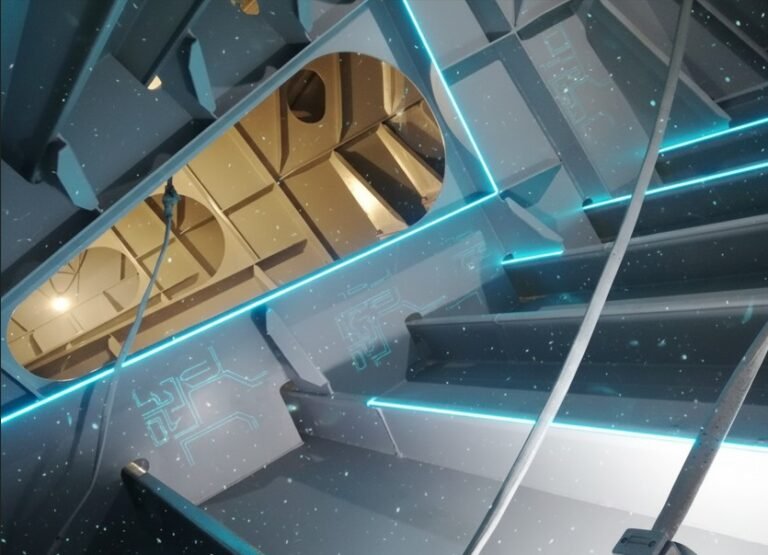
Methanol tank position and project considerations.
Shipowners retrofitting one of their ships to run on methanol face a hard physical challenge: methanol’s Lower Heating Value (LHV).
Methanol’s energy density is significantly lower than that of conventional marine gas oil (MGO) or heavy fuel oil (HFO). To maintain the same operational range, a vessel needs roughly 2.5 times the tank volumeit would need for HFO or MGO carrying the same energy content. It’s worth being precise about where that number comes from: on a pure mass basis, methanol’s LHV (around 19.8 MJ/kg) is only about half that of HFO.
"Methanol fuel tanks take roughly 2.5 more space than oil tanks, while cofferdams are required in some cases for protection"
DNV - Maritime Insight DNV
This discrepancy introduces the volumetric penalty, a design challenge bound together with the safety requirements that call for cofferdams around methanol fuel tanks under MSC.1/Circ.1621.
As a result, retrofitting an existing ship to run on methanol can be difficult if the spaces onboard are limited or already fully committed to cargo.
A methanol retrofit project means optimising tank volume, working out a smart tank layout, and making sure the alternative fuel integration doesn’t compromise the vessel’s stability.
What to consider in the early project phase:
- Ship profile and autonomy
- Volume assessment: converting an existing tank or building a new one
- Stability calculation
Installing cofferdams, on the other hand, adds time and complexity to the project, since they bring ventilation, level sensors and drainage systems along with them.
During a methanol retrofit, the shipowner’s technical team has to carefully assess where the new tank goes onboard.
Existing HFO tanks can be converted, but if the ship needs long range and converting the HFO tank won’t get the vessel to its operational targets on methanol, we’d suggest looking at converting ballast tanks or one or more void spaces instead. If a new tank is required, it takes a proper assessment to land on a feasible, sensible position.
A methanol tank located far from the fuel preparation room means extra metres of pipe and double-walled pipe, longer signal cables for valve actuators and sensors, and a lot more steelwork hours for pipe runs and supports.
A tank in an elevated position is something to avoid. It creates stability issues that show up in the stability calculations, and a high tank position very likely means cofferdams around most of, or the entire, tank.
That translates into less usable tank volume, more installation hours, higher steel costs for the cofferdam structure, and extra spend on all the systems the cofferdam itself requires.
Quick Facts
– Methanol’s lower energy density means a retrofit tank needs roughly 2.5 times the volume of an equivalent HFO or MGO tank.
– MSC.1/Circ.1621 (para 5.3.2) requires a protective cofferdam of at least 600 mm around methanol tanks.
– A tank surface adjacent to a hazardous Zone 1 space or the sea can avoid the cofferdam requirement.
– An elevated tank position raises stability concerns and usually forces cofferdams around most or all of the tank.
– The four ideal positioning criteria are proximity to the fuel preparation room, a low position, adjacency to a hazardous zone or the sea, and proximity to the bunker station.
The ideal methanol tank position
Setting portable tanks aside, they’re small and rarely a good fit for retrofit projects, the remaining options are integral tanks and independent tanks. Integral tanks are built directly into the hull structure: in practical terms, the kind of tank we’re used to seeing on conventionally fuelled ships.
For an integral methanol fuel tank, the ideal position should meet these criteria:
- As close as possible to the fuel preparation room, to keep methanol pipe and double-walled pipe runs short
- As low as possible, so as not to compromise stability
- With one or more surfaces (shell, bottom or bulkhead) adjacent to a hazardous area Zone 1 (typically the fuel preparation room) or to the sea, so the cofferdam can be avoided and volume optimised — this cuts cofferdam installation costs and the systems that go with it, which in turn helps project time and off-hire costs
- As close as possible to the bunker station, again to minimise double-walled pipe runs and optimise cost and schedule
Satisfying all four conditions at once is rare in practice, but hitting three of them usually points to a strategically well-positioned tank, or flags a good candidate for conversion.
IGF Code and Other Rules to be respected
The Interim Guidelines for the Safety of Ships Using Methyl/Ethyl Alcohol as Fuel (MSC.1/Circ.1621), paragraph 5.3.2, don’t allow a methanol fuel tank to sit adjacent to accommodation spaces, category A machinery spaces, or freshwater tanks without a protective cofferdam of at least 600 mm.
The regulatory family this guideline sits alongside, the IGF Code’s provisions for gas-fuelled ships, establishes a minimum protective distance from the side shell for fuel tanks:
D = min (B/5; 11.5 m)
it’s a well-established figure across the low-flashpoint fuel regulatory family and conventional fuel as well although not directly expressed inside MSC.1/Circ.1621. It may be applied by analogy or through class society guidance rather than as a directly numbered methanol requirement. Worth double-checking against the specific class society rule note before using it as a hard design constraint.
Either way, this requirement doesn’t apply rigidly to methanol fuel tanks when an equivalent safety demonstration or probabilistic assessment is submitted to the classification society and flag authority for approval, the same alternative-design logic that governs the whole methanol regulatory framework under SOLAS II-1/55.
Establish a good methanol tank position at the beginning
The methanol tank position is one of the first, and most important, steps in a methanol retrofit project. Generally, shipowners begin by assessing possible solutions based on a very deep knowledge of the ship’s consumption profile and operational goals.
Typically, the shipowner’s technical team selects one or two tanks to be converted, but does not assess all the methanol fuel system and auxiliary system requirements in full.
For this reason, in-depth specialised knowledge on the matter is required. At Flowazur Consulting, we lead feasibility studies for shipowners, starting from the methanol fuel tank and developing all methanol systems to determine project risks, financial investment and lay a solid foundation for the future engineering phase.
Book a call with one of our engineers to discuss your project.
Frequently Asked Questions
Q: When is a cofferdam required around a methanol fuel tank?
A: MSC.1/Circ.1621 (para 5.3.2) requires a cofferdam of at least 600 mm where tank bulkhead is shared with accomodation or other hazard zone 2 (Low risk, without monitoring systems).
Q: Can a methanol tank avoid the cofferdam requirement?
A: Yes, if one or more tank surfaces are adjacent to a hazardous Zone 1 space (typically the fuel preparation room) or to the sea, or if an equivalent safety demonstration is approved by the classification society and flag authority.
Q: What makes a methanol tank position “ideal” in a retrofit?
A: A position close to the fuel preparation room, as low as possible for stability, adjacent to a hazardous zone or the sea to avoid a cofferdam, and close to the bunker station.
Q: Why should an elevated tank position be avoided?
A: It creates stability issues and typically requires cofferdams around most or all of the tank, which reduces usable volume and increases installation and steel costs.
Q: What’s the minimum protective distance from the side shell under the IGF Code framework?
A: D = min (B/5; 11.5 m), a figure from the broader low-flashpoint fuel regulatory family, applied by analogy rather than directly stated in MSC.1/Circ.1621, so it should be checked against the specific class society rule before use as a hard constraint.