
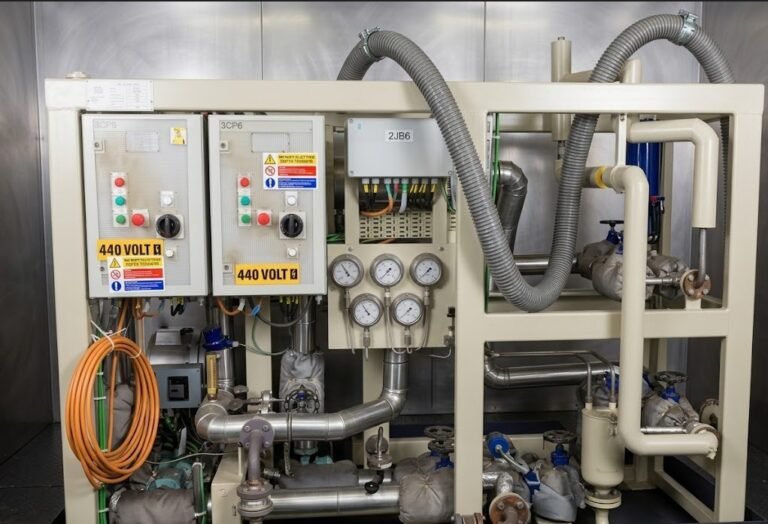
When the project consist of a ship retrofit to run on methanol, purchasing state-of-the-art skids (duplex filters, fuel train valves, high-pressure pumps) from a Tier-1 OEM addresses only a small part of the overall project. A significant portion of the work lies in methanol systems integration challenges.
Dual-fuel vessels using low-flashpoint fuels have a considerably more complex system interface compared to vessels running on conventional fuels such as HFO, VLSFO and MGO.
Low-flashpoint fuel systems, also known as LFSS, require more components and more dedicated auxiliary systems, resulting in a higher number of valves and greater overall system complexity. For example, a low-flashpoint fuel system cannot operate without a nitrogen system to inert and blanket the methanol fuel tank, and nitrogen cannot be produced without a nitrogen generator.
This is one of numerous examples that illustrates the higher degree of complexity, the increased number of installed components, and the sensitivity of the matter.
Quick Facts
– Buying a Tier-1 OEM skid covers only part of a methanol retrofit.
– A methanol fuel system can’t run without a nitrogen system.
– IGF Code Section 9.6 requires the fuel system to flush and inert fuel lines during shutdowns, fuel switchovers, and emergency shutdowns.
– The double-walled pipe’s annular space must be continuously monitored.
– Under IMO-IGF Guidelines Circ.1621 Chapter 6.4, methanol storage must stay under a continuous nitrogen blanket.
Auxiliary systems and functionalities
Methanol fuel systems and their equipment cannot operate independently; they require dedicated auxiliary systems. Nitrogen is one of these, alongside sensor systems, draining, bilge and venting systems.
Under IGF Code Section 9.6, the fuel system must be capable of flushing and inerting the fuel lines during normal shutdowns, fuel switchovers, or emergency shutdowns (ESD).
To achieve this, the system uses a nitrogen purging loop integrated into the fuel lines and double-walled pipes:
- Purge Cycle: Before switching back to conventional marine gas oil (MGO), nitrogen gas must be blown through the transport line to flush all residual methanol out of the engine block and back to the fuel treatment room or a dedicated slop tank.
- Annular Space Management: The outer jacket space must be continuously monitored. Engineering teams must integrate either differential pressure or liquid leakage sensors to guarantee that no methanol is present in the outer pipe, which would indicate a leakage in the inner transport pipeline.
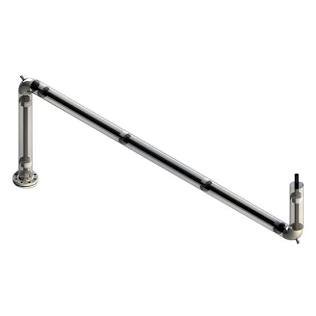
Photo Source: Houpu
What Happens if One or More Auxiliary Valves Fail
Another extremely important functionality, stated in IMO-IGF Guidelines Circ.1621 Chapter 6.4, concerns nitrogen and methanol storage facilities. Methanol must be continuously inerted by a nitrogen blanket throughout the entire storage period in order to prevent the formation of hazardous vapour.
But what happens if one of the nitrogen systems becomes stuck or a valve fails?
Auxiliary systems in a low-flashpoint fuel system must be considered an integrated part of the Low-Flashpoint Fuel Supply System (LFFS), and not as something separate. Consequently, the design and operational philosophy differs considerably from that of conventional fuel systems.
In LFFS onboard integration, scenarios such as the one described above must be accounted for, where a nitrogen branch dedicated to blanketing becomes stuck. In this scenario, the pressure transmitter (PT) installed in the methanol fuel tank will detect the low pressure inside the tank and trigger a critical alarm. Therefore, methanol fuel system onboard integration must incorporate in-depth automation capable of managing all new equipment, valves, sensors and ESD logic.
Other methanol auxiliary systems, such as the bilge system and sprinkler system, must always be capable of communicating with one another in order to trigger an ESD if required.
Practical Systems Engineering Controls the Risk
Successfully integrating a methanol fuel system relies on managing:
- Spatial constraints
- New equipment such as connection blocks, fuel train valves, and related components
- Numerous auxiliary systems and their associated components
- All alarms generated by the components and transmitters installed in the new fuel system, auxiliary systems and methanol fuel tank
The system responsible for continuously collecting information from all installed systems and elements is the automation system.
Therefore, in order to successfully integrate a new methanol fuel system onboard, it is essential to have a thorough knowledge of all methanol fuel system P&IDs, all related auxiliary systems, and how these systems interact and work together. Furthermore, a deep understanding of the safety philosophy and safety processes integrated within the systems is fundamental.
For this reason, only experienced piping engineers or marine systems engineers should work on these systems. An inexperienced engineering team may overlook one or more critical assessments, leading to incorrect system integration, resulting in onboard rework, financial losses and project delays.
At Flowazur Consulting, our team of experienced marine systems engineers supports EPCs, shipyards and shipowners during the piping engineering and integration phases of methanol fuel systems onboard, reducing engineering uncertainties and accelerating the entire engineering process.
Book a call with one of our engineers to discuss your project.
Frequently Asked Questions
Q: Why does a methanol fuel system need a nitrogen system?
A: To inert and blanket the fuel tank; without nitrogen, the low-flashpoint fuel supply system can’t operate safely.
Q: What does IGF Code Section 9.6 require for methanol fuel systems?
A: The system must be able to flush and inert fuel lines during normal shutdowns, fuel switchovers, and emergency shutdowns.
Q: How is the double-walled pipe’s annular space monitored?
A: With differential pressure or liquid leakage sensors that detect any methanol present in the outer pipe.
Q: What happens if a nitrogen blanketing valve gets stuck?
A: The pressure transmitter in the methanol fuel tank detects the drop in pressure and triggers a critical alarm.